Integrative Thinking Project
Expectations
- Foundations of Management
- Evaluate the impact of issues related to ethics and social responsibility on the management of organizations.
- Leadership
- Demonstrate an understanding of group dynamics
- Demonstrate an understanding of proper leadership techniques in a variety of situations
- Management Challenges
- Demonstrate an understanding of the communication process within the workplace
- Planning & Controlling
- Demonstrate an understanding of appropriate planning tools and techniques in a variety of situations
- Analyse the relationship between strategic planning and the success of an organization
Integrative Thinking is a concept where a leader looks to combine multiple elements into a novel solution. It challenges managers to be open-minded about their business practices. Instead of choosing between two opposing views, integrative thinkers craft an ingenious solution featuring aspects of multiple systems (Martin, 2017). The process is collaborative, problem-based and project-based, key tenets of Understanding by Design (Ontario Ministry of Education, 2013, p. 23).
Why was this unit created?
Table of Contents
Welcome
Introduction, Breakout Groups & Icebreaker
Self-EvaluateCreate Leadership Values & Share with Group
ExploreTeam Teaching, Corporate Social Responsibility Lessons
DiscussCoffee Chat with Expert & Ethical Decision-Making
Interact
Apply Integrative Thinking to Solve a Complex Problem
RefineClarify Ideas, Get Feedback from Experts & Pitch Solutions
ReflectDebrief the Project, Assist Students in Retaining their Learning
AssessmentsLeadership Philosophy, Group Case Study & Integrative Thinking Project
This unit in the Business Leadership course combines leadership and Corporate Social Responsibility with a passion product. When students work together on issues that matter to them, they become engaged and motivated. While there are some lessons, the teacher serves more as a guide on the side who provides direction about how to think (Sword, 2022). It is an Experiential Learning project that brings experts into the classroom to help students polish their ideas. Lastly, it permits the teacher to introduce current events into the curriculum.
Welcome
One Class
Introduction, Breakout Groups & Icebreaker
- Period 01: Diversity in Leadership
- Welcome students from both classes
- Explain Integrative Thinking unit
- Icebreaker Activity
- Debrief/Reflect
Value Diverse Perspectives
Students are placed in diverse groups by the teacher. The will be a mix of prior knowledge and learning styles. Some will be more comfortable with abstract reasoning than others. They enjoy problem-solving and creativity but may be unsure how to get started. Debating business ethics throughout the unit will help students develop their cognitive flexibility, an important executive function (Tough, 2012, p. 114). It will be challenging but when the teacher holds the class to high standards with constructive feedback, the students will improve their grit (Duckworth, 2016, p. 218).
Self-Evaluate
One Week
Create Leadership Values & Share with Group
- Period 02: Core Values
- Role Models
- Students consider role models & why they are effective leaders.
- Indra Nooyi Case Study
- Explain Leadership Philosophy
- Show Teacher Exemplar to build trust
- Individual Work Time to complete Leadership Philosophy
- Role Models
- Period 03: Individual & Group Values
- Pitch personal Leadership Philosophy to group
- Determine Core Values as a group
Collaborate & Debate Ideas
After an icebreaker, two warmup activities help the groups learn to work together. Personal leadership philosophies lead to a statement of group values. After learning about the role of C.S.R. in business, the groups develop a plan for an ethical situation, with the help of research and a community business person. This unit suits the development stage of Grade 12 students. Eighteen year-olds are idealistic and have high capacity for empathy and insight. They are also able to express their own opinions and enjoy working with others (Vanbuskirk, 2022).
Explore
Two Classes
Team Teaching, Corporate Social Responsibility Lessons
- Period 04: Corporate Social Responsibility
- Stakeholders
- Case Study (Personal): “Chair Girl”
- Case Study (Business): All the Money in the World
- CSR Models
- B-Corporations
- Case Study: Tentree
- Stakeholders
- Period 05: Ethical Decision-Making
- Corporate Values
- Ethical Decision-Making
Share Teaching Expertise
Discuss
Two Classes
Coffee Chat with Expert & Ethical Decision-Making
- Period 06: Introduce Case Study
- Read Tiny Mile Robot Case
- “Coffee Chat” with Cheapr Eats Representative & Ask Questions
- Period 07: Practice Working Together
- Discuss Information from Case & Coffee Chat
- Evaluate the Ethical Dilemma
- Summarize Group Solution
The Integrative Thinking Project involves small lessons, work periods and discussions with a teacher. Teams select a problem in the community and research all of the causes. They use “empathy experiences” to put themselves in the shoes of the stakeholders in order to see their perspective. They evaluate the merit of diverse ideas and integrate them into one of three models (hidden gem, decomposition and double-down).
Interact
One Week
Apply Integrative Thinking to Solve a Complex Problem
- Period 08: Introduction to Integrative Thinking
- Review the Project
- Getting Started
- Framing the Problem
- Identify Stakeholders
- Period 09: Drive for Insights
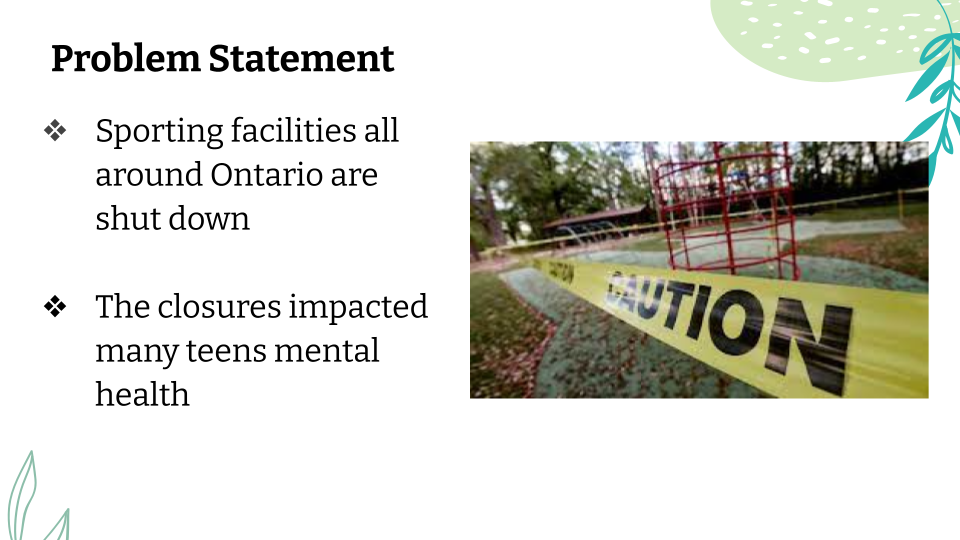
- Write a Problem Statement
- Knowledge Model
- Empathy Experiences
- Data Collection
- Period 10: Analyze Causality
- Ladder of Inference
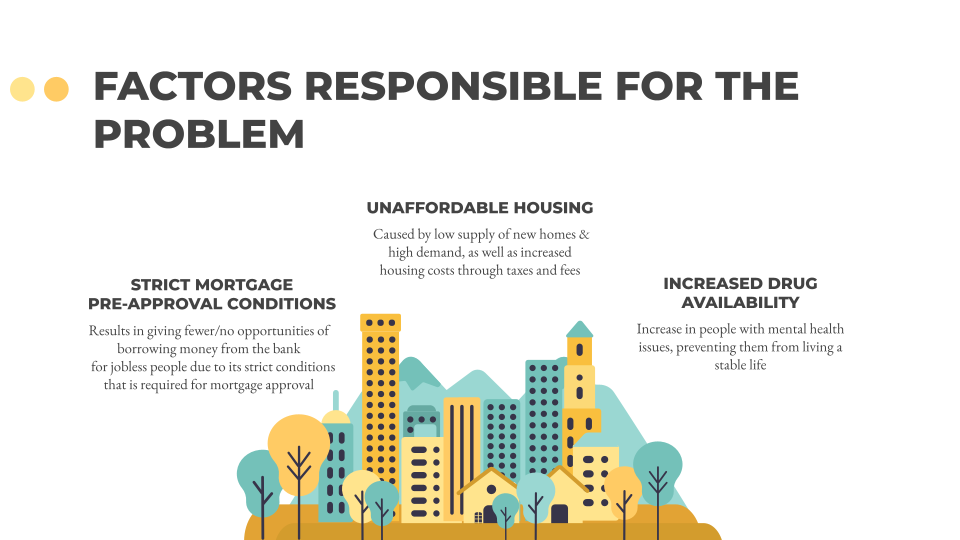
- Causal Model
- Decision-Architecture
- Period 11: Find a Solution
- Pro-Pro Analysis
- Types of Solutions
- 3P Partnerships
- Create an Action Plan
- Period 12: Explain Solution
- Slide Decks
- Organize Ideas
- Persuade Stakeholders
Resources
- Integrative Thinking
- Slides
- Rough Notes
- Causal Model
- Ladder of Inference
-
- Jamboard
- Worksheet
- Pro-Pro Analysis
- Project Instructions & Rubric
- Make a Slide Deck
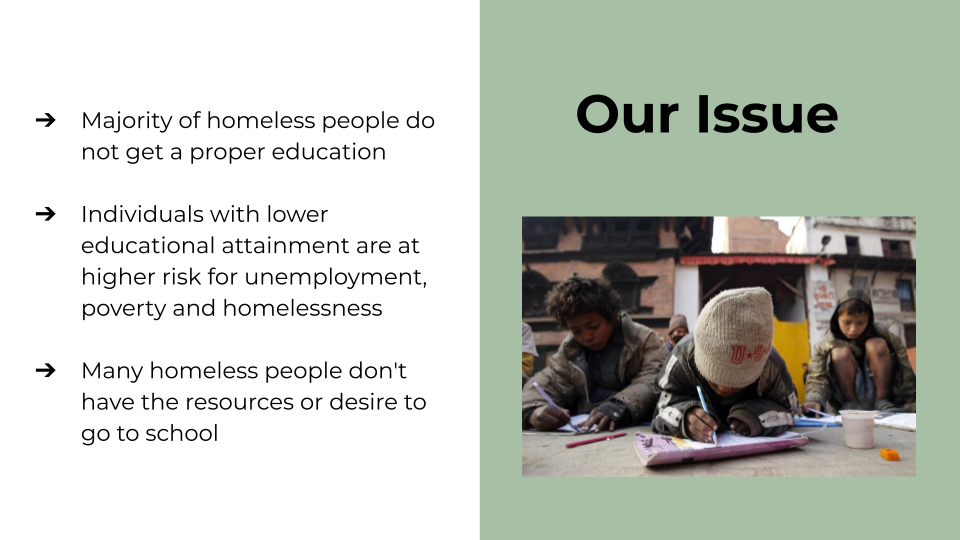
Student Exemplars



Refine
Two Classes
Clarify Ideas, Get Feedback from Experts & Pitch Solutions
- Period 13: Proofread & Polish
- Meet with Experts to Get Feedback
- Prepare Pitches
- Period 14: Pitch Day
- Make Final Changes
- Pitch to the Class
- Submit Assessments
Bring Experts into the Classroom
Reflect
One Class
Debrief the Project, Assist Students in Retaining their Learning
- Period 15: Debrief the Project
- After-Action Review
- Group Reflection
- Individual Reflection
The teacher is able to practice Differentiated Instruction by assessing continuously, responding to the needs of each learner and helping the teams build community (Ontario Ministry of Education, 2013, p. 23). Assessment of all strands can take the form of a pitch or report. The exercise will conclude with a reflection to consolidate what the students learned about innovation.
Assessments
Assessments for Learning
Assessment as Learning
Assessment of Learning
Integrative Thinking Project (Instructions & Rubric)
Strands
- Knowledge/Understanding
- Thinking/Inquiry
- Application
- Communication
Moving Forward
Lessons Learned
Issues to monitor during the project include the following:
- Structure: Although it is a passion project, some students have trouble getting started. Teachers can provide brainstorming or collaboration tips, worksheets & scaffolding based on the needs of their class.
- Social Loafing: When group work is done virtually or in a hybrid class, it increases the chances that someone might not contribute their share of the workload. Explain the significance of the project & let students have agency. Circulate frequently & utilize an anonymous suggest box to ask questions & report problems.
- Attention to Detail: Use the Assessment for Learning & Assessment as Learning to monitor the students’ knowledge of concepts & their critical thinking skills. Establish routines with small projects regarding the level of specific detail. Bringing experts into the classroom can inspire students to think deeply about the issues.
Next Steps
Changes that I have made since 2022:
- Grade 10 Culminating: Integrative Thinking develops Global Competencies & entrepreneurship.
- Thinking Classroom: Creating a space to foster collaboration.
- Unplugging: Practice design thinking in engaging environments.
List of Works Cited
- Duckworth, A. (2016). Grit: Why passion and resilience are the secrets to Success. Collins.
- Martin, R. L. (2014, August 1). How successful leaders think. Harvard Business Review. Retrieved July 18, 2022, from https://hbr.org/2007/06/how-successful-leaders-think
- Ontario Ministry of Education. (2013). Learning for all. Government of Ontario. Retrieved July 12, 2022, from https://www.ontario.ca/page/learning-all-guide-effective-assessment-and-instruction-all-students-kindergarten-grade-12
- Sword, R. (2022, June 15). What is genius hour in the classroom?: Ideas & examples. The Hub. Retrieved July 16, 2022, from https://www.highspeedtraining.co.uk/hub/genius-hour-in-the-classroom
- Tough, P. (2012). Helping children succeed: What works and why. Houghton Mifflin Harcourt.
- Vanbuskirk, S. (2022, March 11). 18-year-old child development milestones. Verywell Family. Retrieved July 19, 2022, from https://www.verywellfamily.com/18-year-old-developmental-milestones-2609030